Six fine-art
interpretations.
Every portrait we render begins with the same brief: keep the pet recognisable, change the medium. Choose the style that matches them, or the room they'll hang in.
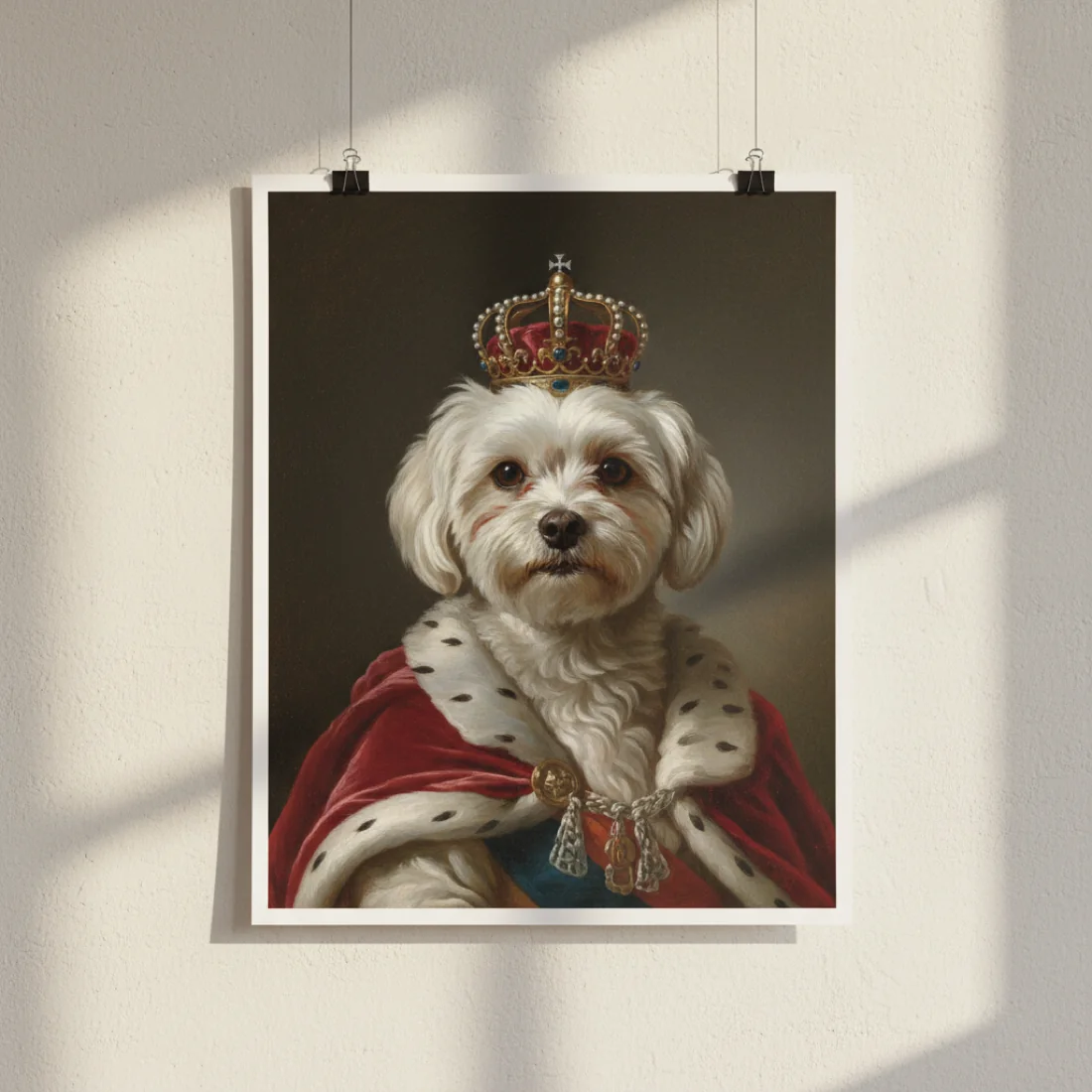
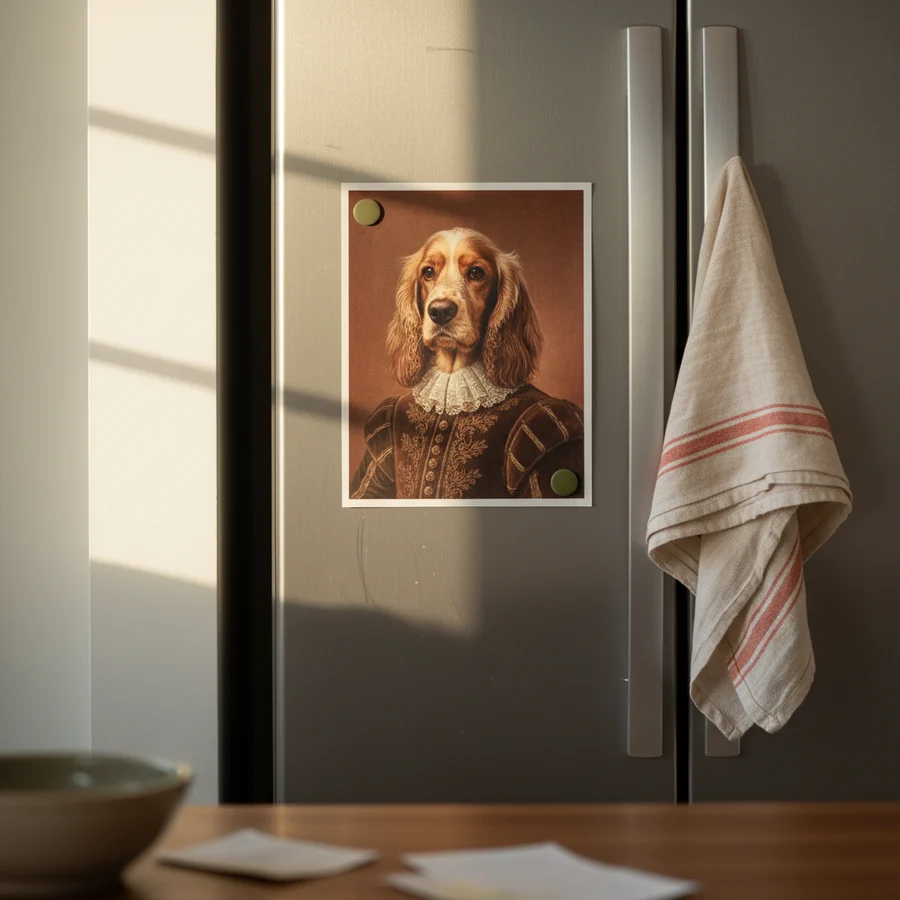
Royal Portrait.
The 18th-century court painters. Gainsborough, Reynolds, translated for the pet who already runs the house. Crimson velvet cape with ermine trim, a small jewelled crown, gilded throne, soft window light from the right. Painted regally, never with irony.
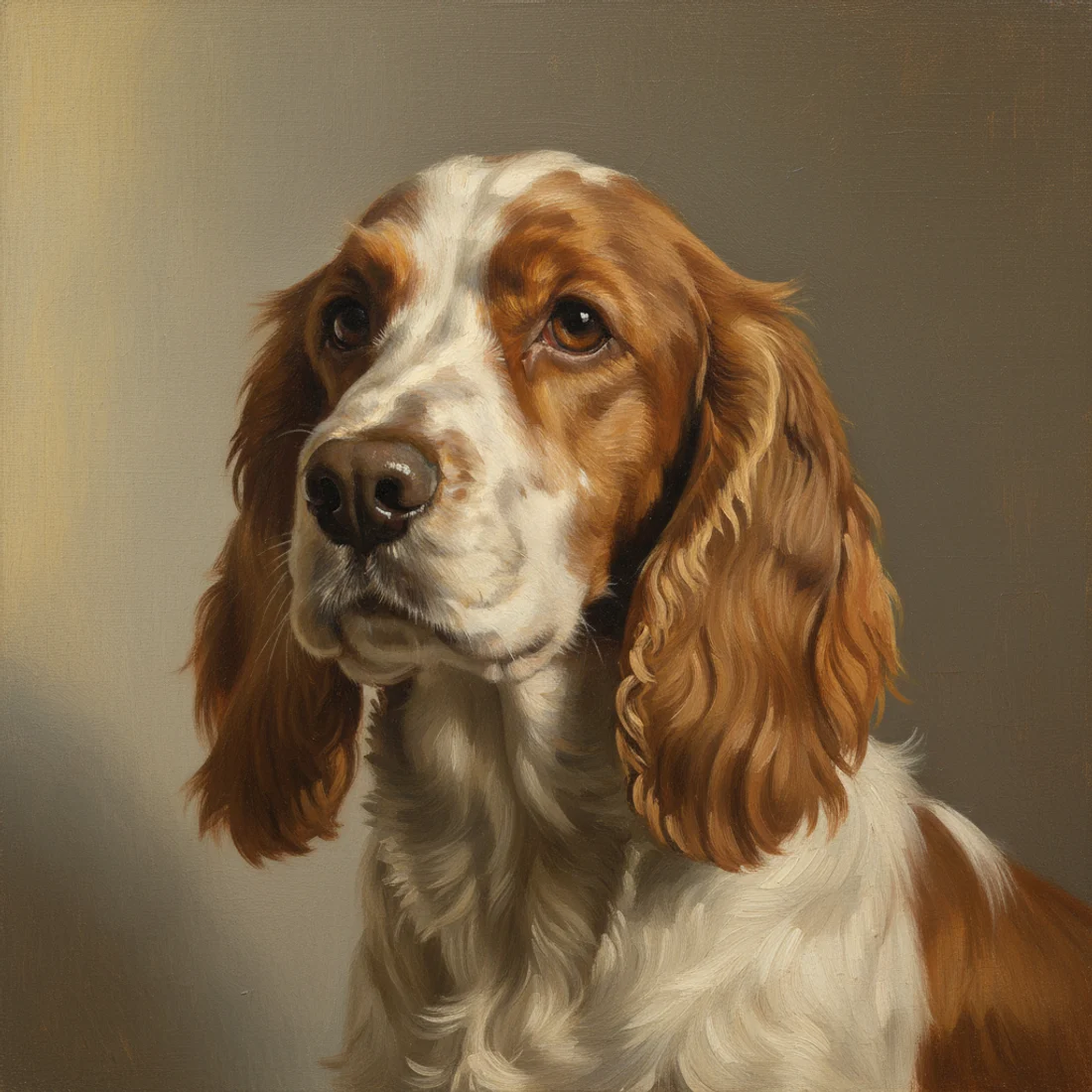
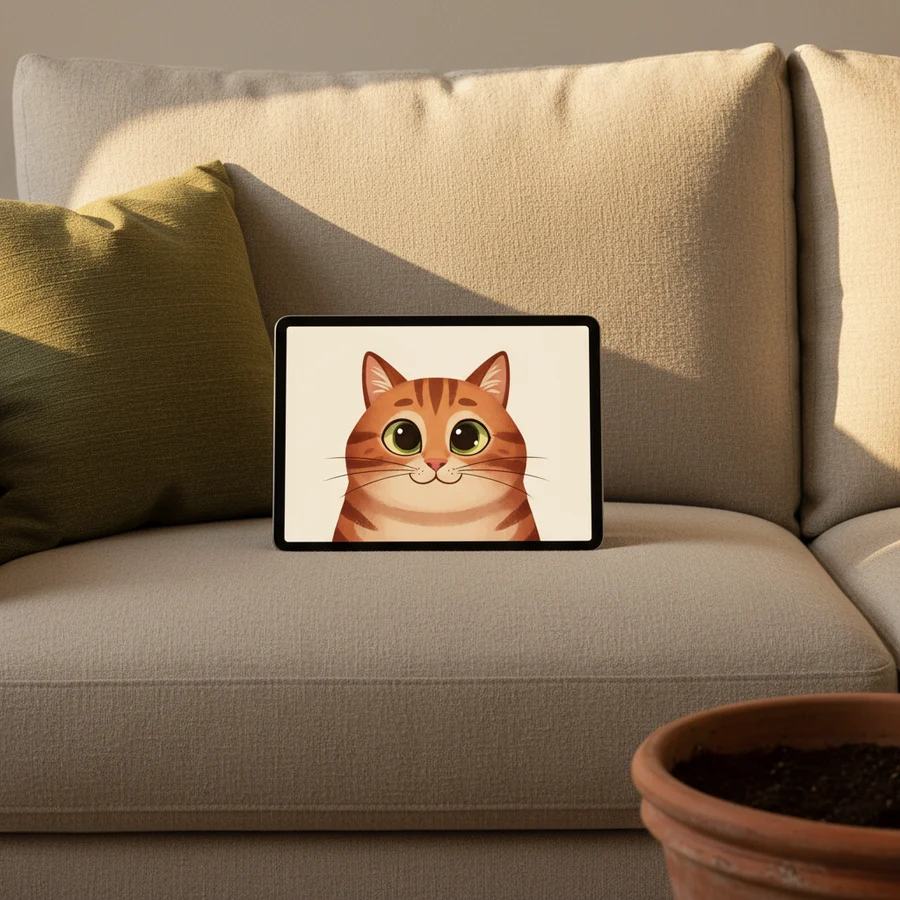
Oil Painting.
The contemporary heir to the Old Master tradition. Loaded brushwork on a primed linen, warm directional studio light, the kind of palette Velázquez and Sargent worked in. Painted with restraint - no costume, no theatre. Just your pet, in the register of a painting that belongs above a fireplace.
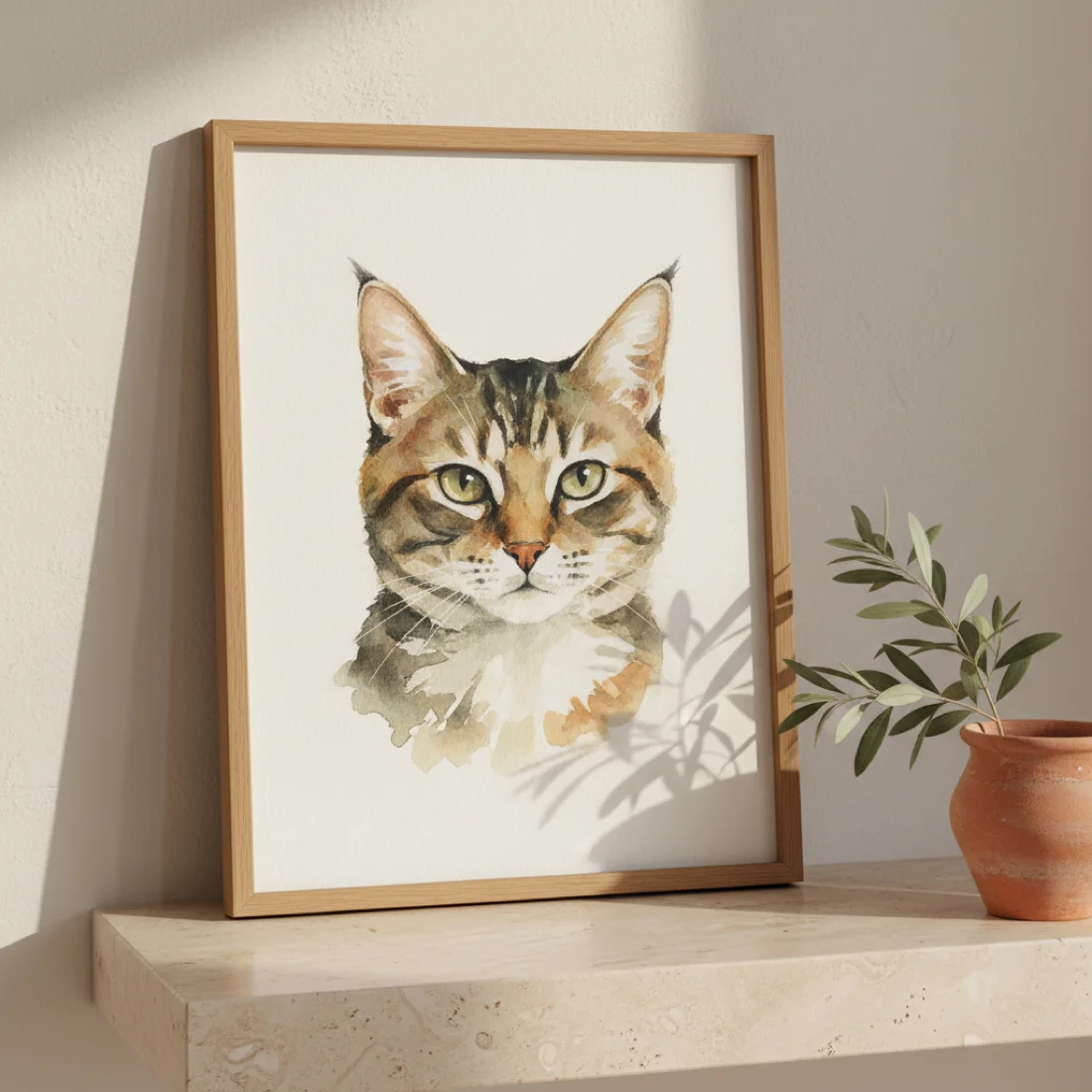
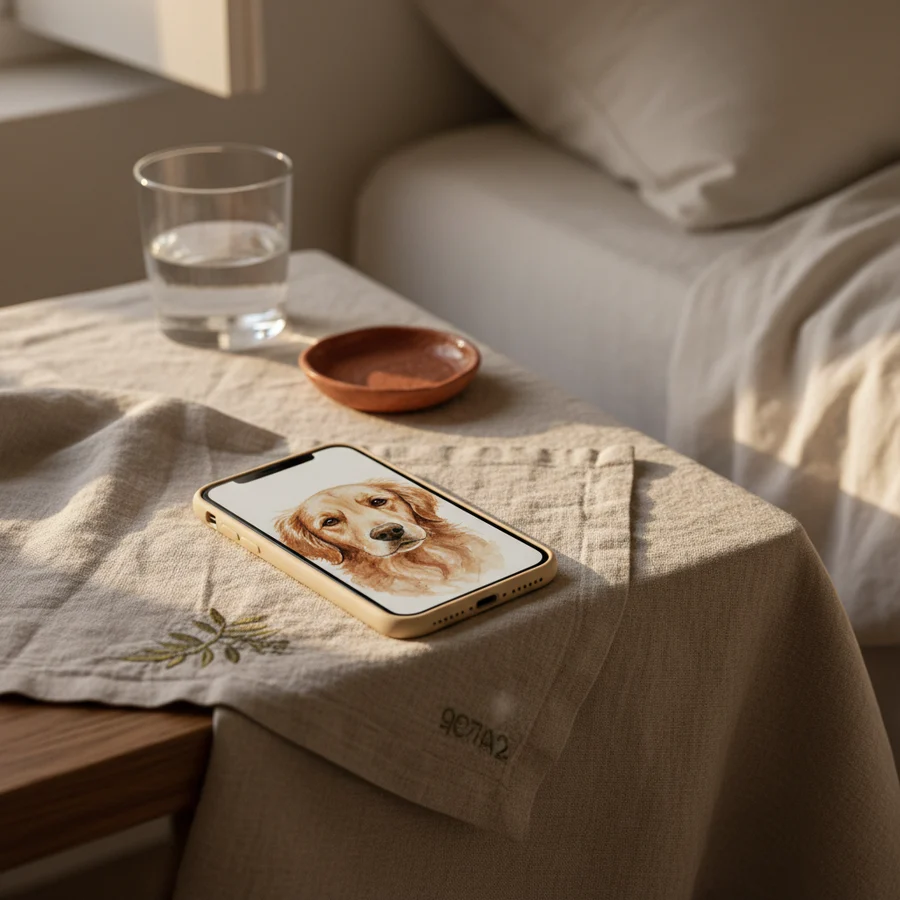
Soft Watercolour.
Loose, contemporary watercolour with wet-on-wet washes and gentle paper bleed at the edges. Head and shoulders only, white negative space around the subject, the pet's eyes painted in slightly higher detail than the rest. Muted earth tones with one accent drawn from the pet's eyes.
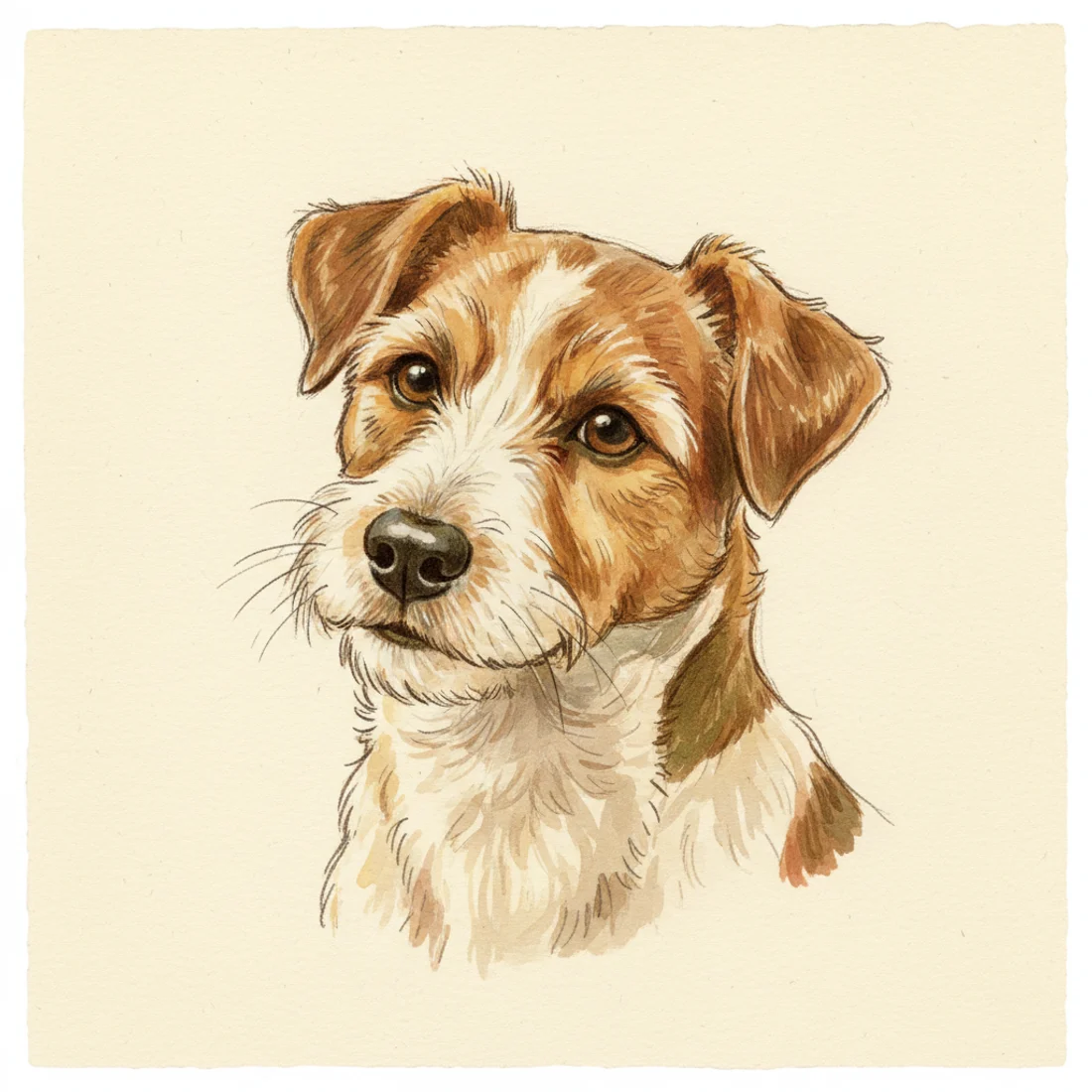
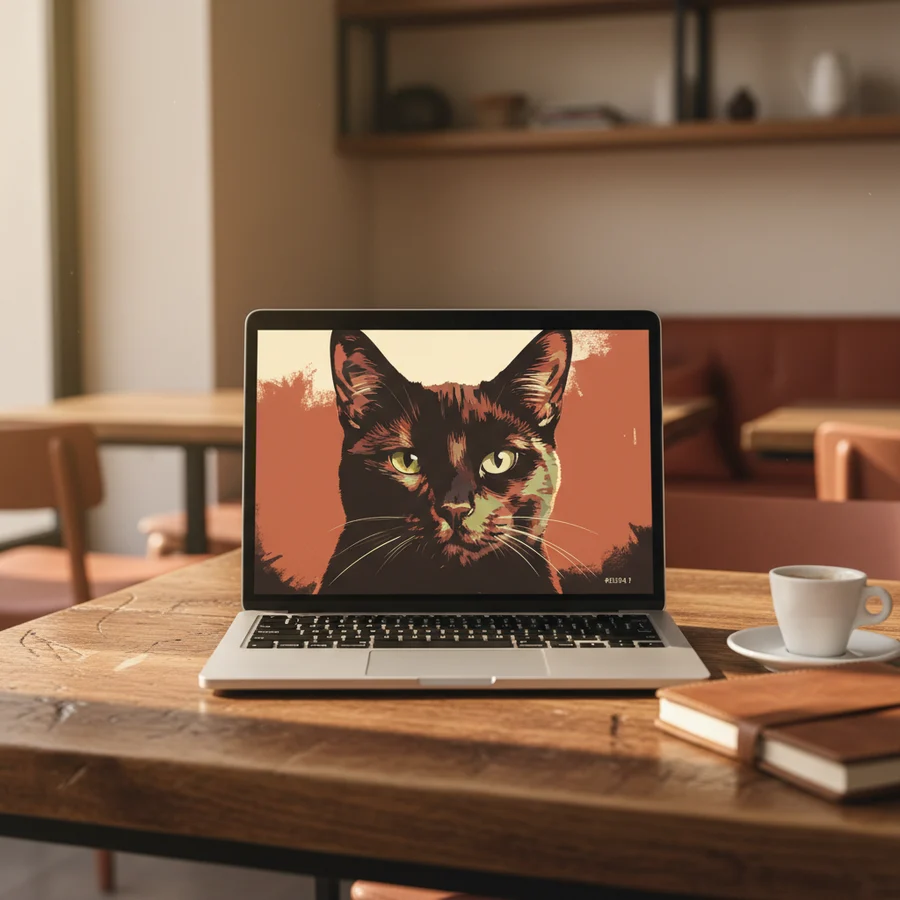
Storybook Illustration.
In the register of Beatrix Potter and Quentin Blake. Painterly washes of gouache and ink, considered linework around the eyes, a gentle warmth that reads as nostalgia rather than novelty. Not cartoon, not animation - a literary illustration of your pet, the kind that could open a children's book that adults keep on the shelf.
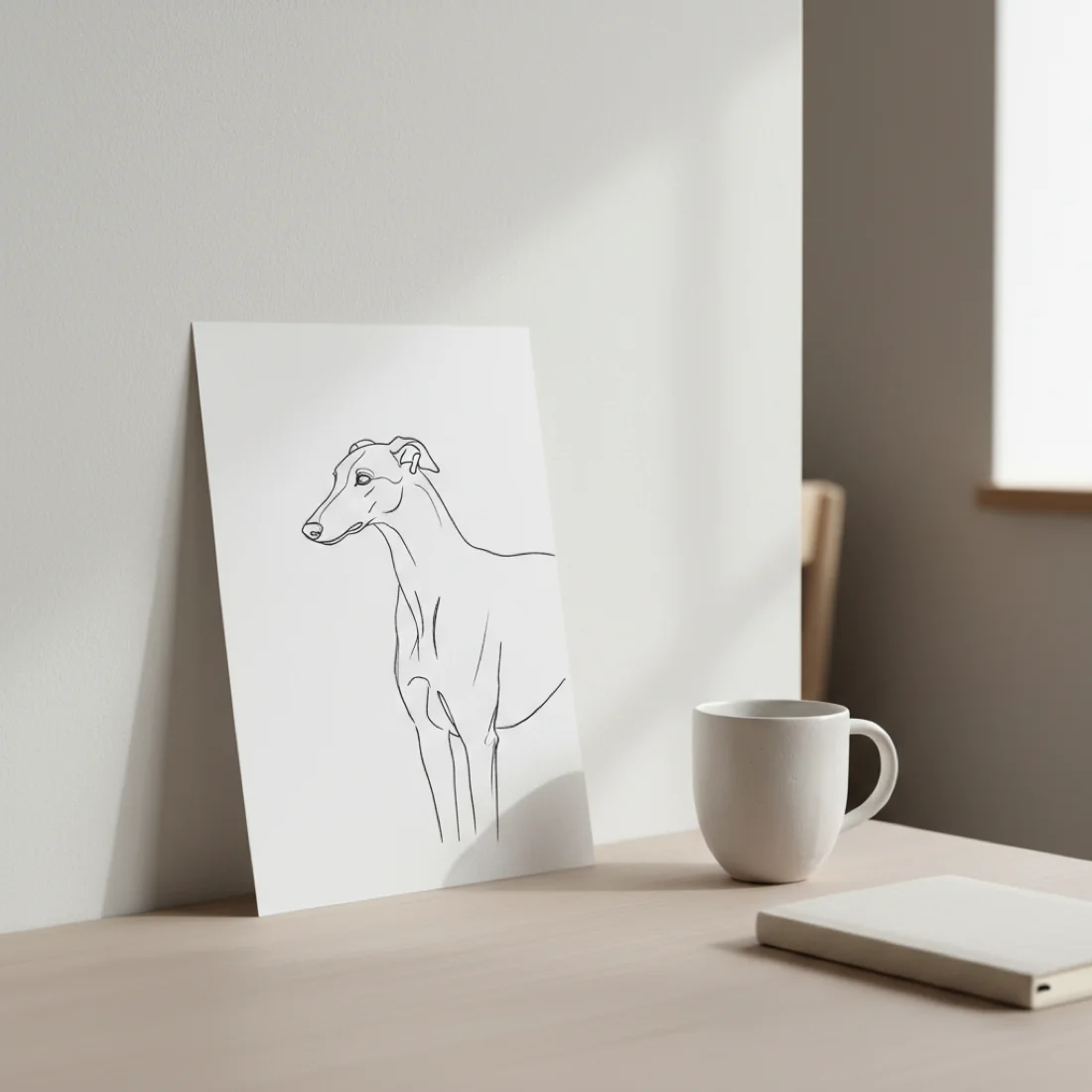
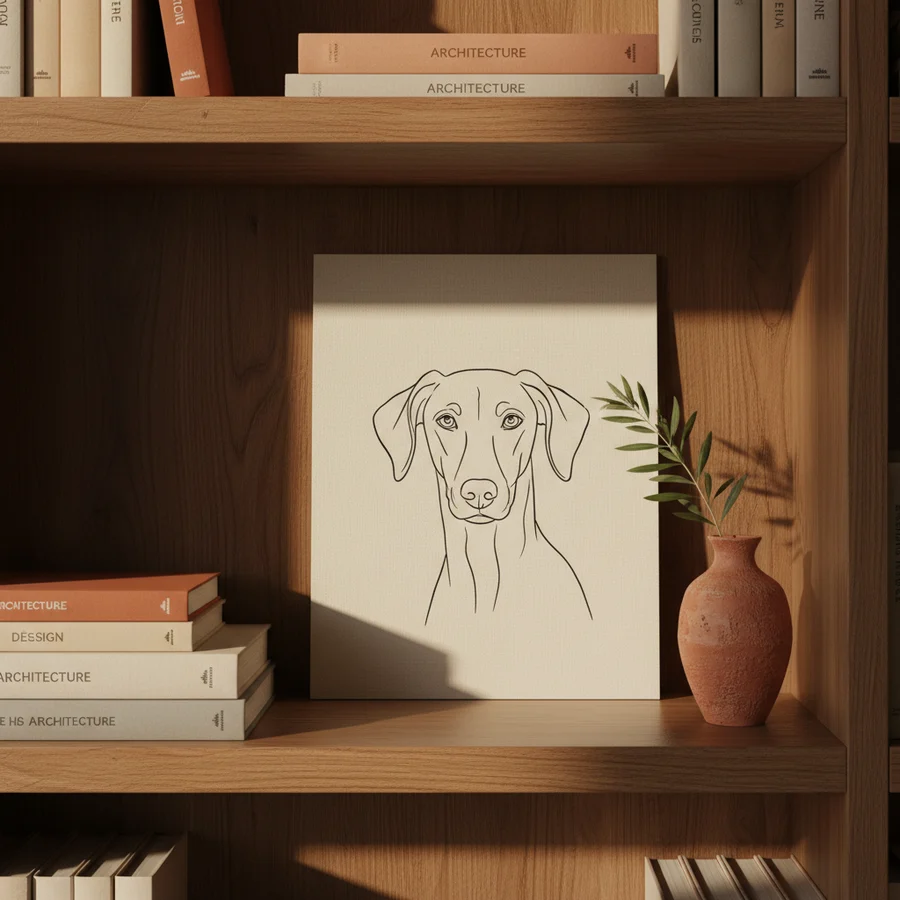
Minimal Line.
A single flowing black ink line on pure white. No shading, no fill, no colour, just the silhouette of your pet's head and shoulders. Eyes are two solid dots. Nose is a single curved mark. Hand-drawn imperfection retained. Generous white space.
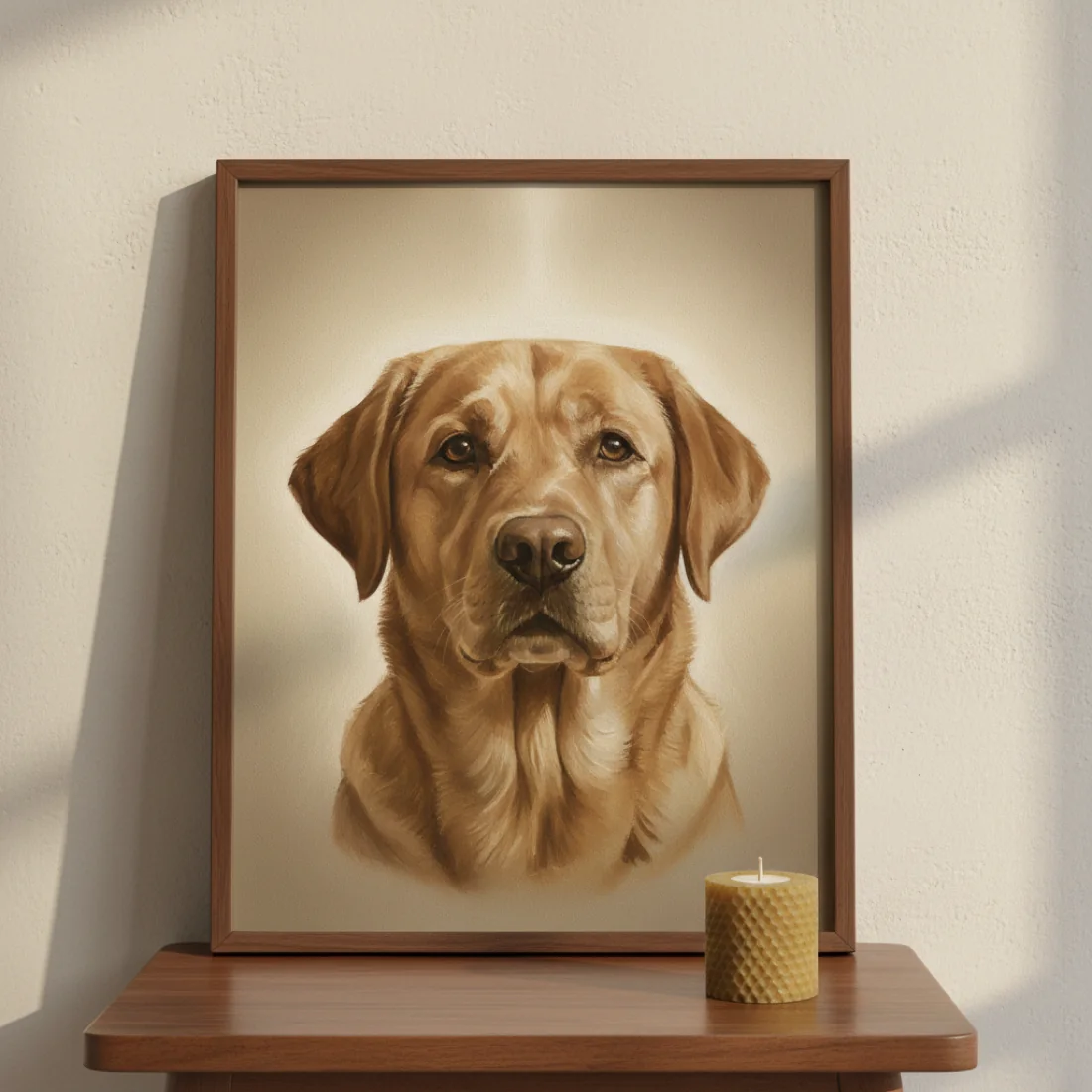
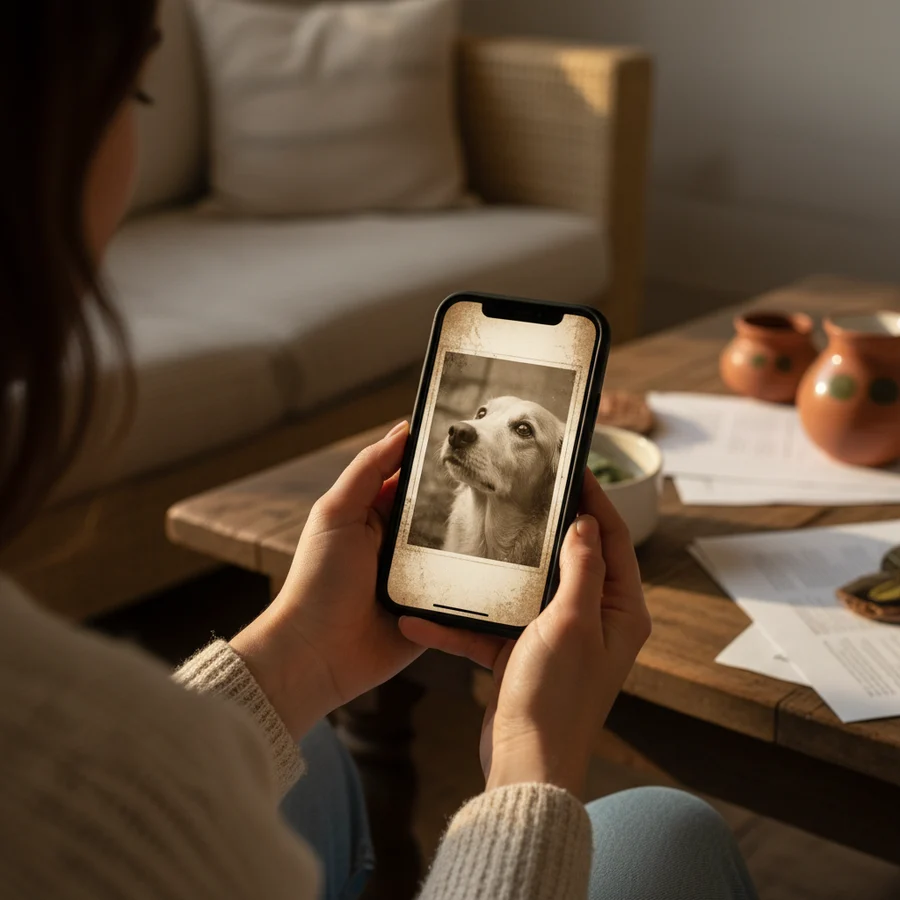
Memorial.
For the pet you've lost. Soft directional light from above and slightly behind, creating a quiet halo through the fur. The pet looks calmly toward the viewer, peaceful, dignified. Warm cream-to-sepia palette. No religious symbols. No dates. A reverent, gentle tribute - not a grand statement.