12 Ways Dogs Show Affection - A Behaviourist's List
An ethologist-cited list of the twelve behaviours dogs use to show affection. Sourced where possible from canine cognition research, with notes on the behaviours that are commonly misread.
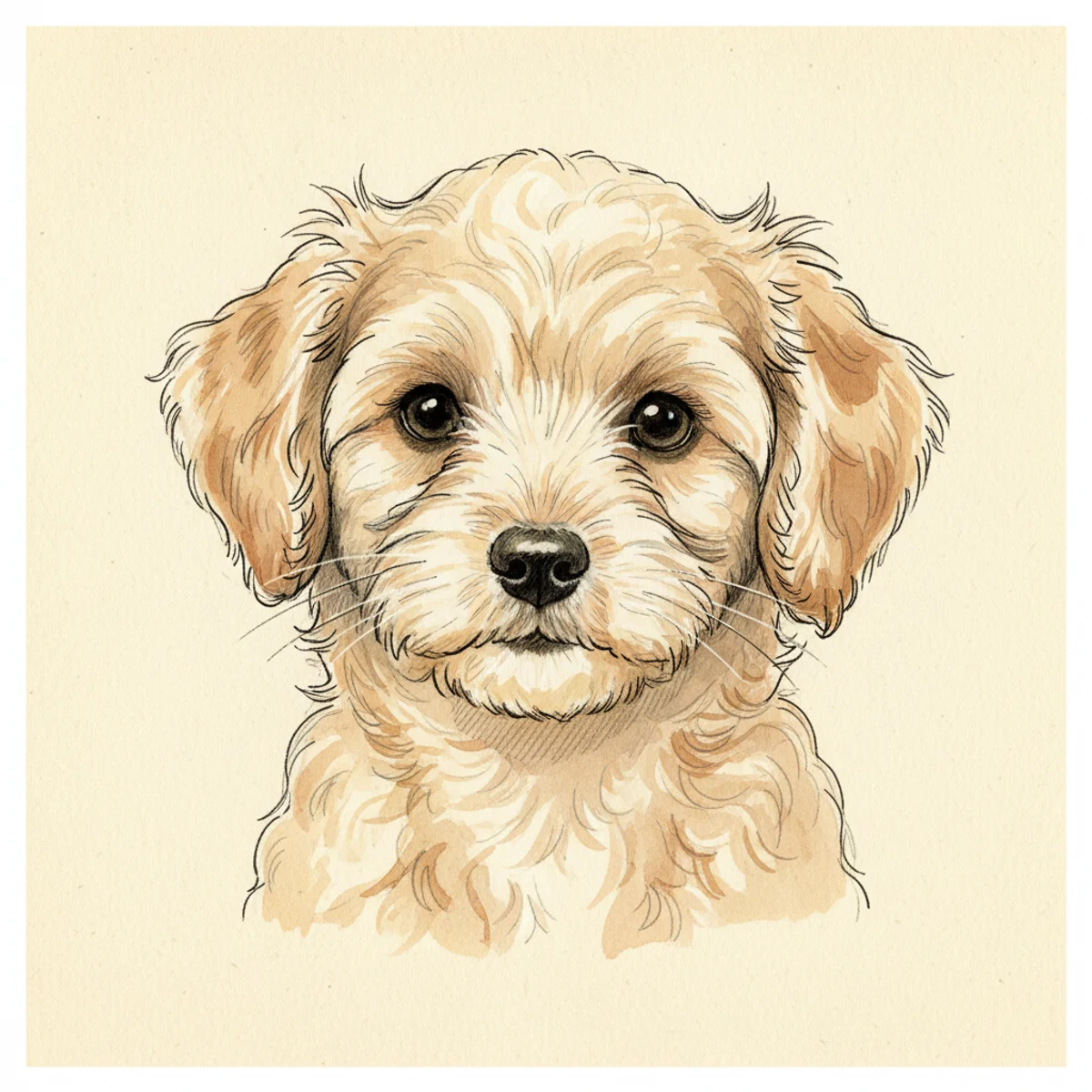
The "how do dogs show affection" search returns roughly 50,000 blog posts in 2026 and most of them recycle the same dozen behaviours without source citations. We are not behaviourists, but we have spent the last year reading the published canine cognition literature (Brian Hare's group at Duke, Adám Miklósi's group in Budapest, Alexandra Horowitz at Barnard) and the picture is more interesting than the popular writing suggests.
This is the twelve-item list, with citations where the research is solid and honesty where the behaviour is observational rather than experimentally verified.
The twelve behaviours
1. Sustained eye contact
The clearest single signal in the research literature. When a dog looks into your eyes for a sustained moment, oxytocin (the bonding hormone) rises in both the dog and the human - the same neurochemical exchange that occurs between mother and infant.
Reference: Nagasawa, M., et al. (2015). Oxytocin-gaze positive loop and the coevolution of human-dog bonds. Science, 348(6232), 333-336.
What it looks like: relaxed eye contact, soft expression, no pupil dilation, often paired with a slight tilt of the head. The dog is not staring (which can be a challenge signal in dog-dog contexts) but is holding gaze in a way that is calm and engaged.
2. Leaning against you
A dog who leans their full body weight against your leg or torso is doing something that has no equivalent in dog-dog social behaviour. The behaviour is human-specific and appears to be a form of trust-display - the dog is putting themselves in a position where they could not flee quickly if needed.
This is observational rather than experimentally measured, but the pattern is consistent across breeds and ages.
3. Following you from room to room
Sometimes interpreted as anxiety, but in the absence of other anxiety signals (panting, pacing, vocalising, destructive behaviour when separated), room-following is consistent with social attachment. The dog wants to know where their primary human is and is reassured by proximity.
The behaviour is distinct from clingy anxious following. Affection-following is relaxed - the dog comes into the room, settles down, and goes about their own business in your presence.
4. Tail position and movement
The popular "wagging tail = happy" simplification is wrong in important ways. The relevant signals are:
- Loose, broad wag at mid-height - relaxed and engaged
- Whole-body wag (the entire back end moves) - high affection, particularly common in greeting
- High stiff wag - alertness or arousal, not affection
- Low tucked wag - anxiety or submission, not affection
- Tail wag with the body curving slightly to one side - particularly affectionate; the curve shows the dog is fully relaxed
Reference: Quaranta, A., et al. (2007). Asymmetric tail-wagging responses by dogs to different emotive stimuli. Current Biology, 17(6), R199-R201. (Right-leaning tail wags correlate with positive stimuli; left-leaning wags with negative.)
5. Bringing you things
The dog who carries their favourite toy to you when you come home, who deposits a chewed slipper at your feet, who occasionally brings you a piece of broken stick - they are sharing. The behaviour is a modification of resource-presentation, which in wild canids is associated with pack-bond signalling.
This behaviour is more common in retriever-line breeds (Labradors, Goldens, Spaniels) but appears across breeds when the bond is well-established.
6. Yawning when you yawn
Contagious yawning between humans is a marker of social empathy. Dogs catch yawns from humans, and the rate of catching correlates with the strength of the dog-human bond - dogs catch yawns from familiar humans more reliably than from strangers.
Reference: Romero, T., et al. (2013). Familiarity bias and physiological responses in contagious yawning by dogs support link to empathy. PLOS ONE, 8(8), e71365.
7. Sleeping in physical contact with you
A dog who chooses to sleep touching you - paw on your foot, head on your lap, back against your side - is displaying high social trust. Sleep is the most vulnerable state; choosing to be in physical contact during sleep is a deliberate signal.
The behaviour is distinct from dogs who must be in physical contact (which can indicate separation anxiety). Affection-sleep is relaxed: the dog falls asleep quickly, breathes slowly, and does not startle at small movements.
8. Soft eye blinking and slow blinks
Slow blinking in dogs (a half-closing of the eyes while looking at you) is a calming signal in dog-dog communication. Directed at humans, it is consistent with social ease and affection. Cats display the same signal, sometimes called the "slow blink" or "cat kiss."
This is observational but cross-species consistent.
9. Pawing or nudging you
A gentle paw on your leg or a nudge with the nose is often a low-key affection-request behaviour. The dog is asking for attention without escalation. Distinct from pawing that is demanding (food, walk, door-opening) - affection-pawing tends to be gentler and is not followed by a specific request.
10. Bringing themselves into your physical space
A dog who sits on your foot, who tucks their head under your hand, who positions themselves so that you have to step over them to leave the room - they are bidding for proximity. The behaviour is a modification of pack-positioning that wild canids use with bonded partners.
11. Licking your face or hands
Often interpreted as a kiss. The behavioural origin is more complex - face-licking in wild canids is a juvenile food-solicitation behaviour, and in domesticated dogs the licking has retained as a generalised social-bonding signal. The "kiss" interpretation is anthropomorphic but not entirely wrong; the licking is socially affiliative.
The exception: stress-licking (excessive licking of you, themselves, or surfaces) can indicate anxiety rather than affection. Context matters.
12. Relaxed body language in your presence
The summary signal. A dog who is genuinely affectionate toward you displays the full set of relaxed body markers when you are nearby: soft eyes, ears in their natural position (not pinned back, not high-alert forward), mouth slightly open or relaxed-closed (not tight-shut), weight evenly distributed across all four feet, tail in its natural carriage.
If you walk into a room and your dog softens visibly - everything relaxes - that is affection in its clearest form.
Behaviours commonly misread as affection
Equally useful: the behaviours that get reported as affection but are not.
Tail-wagging at any speed or height
The signal is more specific than "wagging = happy." Low slow wags can indicate uncertainty; high stiff wags can indicate alert arousal. Affection-wagging is loose, broad, and mid-height.
Excessive licking
Repetitive licking of your hands, your face, themselves, or surfaces can indicate stress, anxiety, or medical issues (especially licking the air or licking surfaces). If the licking seems compulsive rather than affectionate, consult a vet.
Rolling over to show the belly
Often interpreted as "asking for belly rubs," which is sometimes correct. But rolling over can also be appeasement or submission - the dog is signalling "I am not a threat." Read the context: a relaxed dog who rolls and then stays loose is asking for belly rubs; a tense dog who rolls and then freezes is appeasing.
Jumping up to greet
This is excitement, which is not the same as affection. Excited greeting behaviour is consistent with bond, but excitement specifically can indicate over-arousal that needs management.
Excessive following
Distinguishable from affection-following by the anxiety markers - panting, pacing, whining, inability to settle when you sit down. If the dog cannot relax when you are present, the following may be anxiety rather than affection.
How dogs show affection differently across breeds
Some breed-specific notes:
- Working line breeds (Border Collies, Belgian Malinois, working Labradors): affection often comes through tasks rather than physical contact. The dog who insists on retrieving for you, who herds you toward the door, who refuses to settle until you have given them a job - this is affection through work.
- Northern breeds (Siberian Huskies, Akitas, Shibas): more reserved physical displays. Sustained eye contact and following are more common than leaning or licking.
- Toy breeds (Chihuahuas, Yorkies, Pomeranians): intense physical-contact preferences. Lap-sitting, chest-cuddling, sustained physical proximity.
- Hound breeds (Beagles, Bassets, Bloodhounds): affection often expressed through vocalisation. The "bay-when-you-come-home" signal is highly affectionate in hound breeds even though it sounds dramatic.
- Bully breeds (Pit Bull types, Staffordshires): wide range of affection signals. Many are intensely physical-contact-oriented; some are more like working dogs in their task-based affection display.
These are generalisations. Individual variation within breed is large.
What this means for portraits
A pet portrait often catches one specific behavioural moment. The most successful portraits we render are typically:
- A dog or cat in relaxed body language (signal 12 above)
- Often making soft eye contact (signal 1)
- Sometimes in a proximity-bid posture (signal 10, head tilted slightly toward the viewer)
If you are choosing a photograph for a portrait, look for the photograph where the dog or cat is genuinely relaxed and engaged with you. Not the action shot from the beach. The quiet moment at home, near a window, looking up at you.
Our Soft Watercolour and Oil Painting styles render relaxed-affection postures particularly well. The Storybook style catches the bringing-you-things behaviour beautifully. The Royal Portrait style emphasises bearing rather than affection, which suits some dogs and not others.
Frequently asked questions
Do dogs love their owners?
The neuroscience consensus: yes, in the sense that the same neurochemical and brain-region patterns that underlie human social bonding are present in dog-human bonded relationships. The oxytocin loop research (signal 1 above) is the clearest evidence.
Can dogs be affectionate toward multiple people equally?
Yes. Dogs often have a primary bonded human and secondary bonds with other household members. The primary bond is typically with whoever provides the most reliable food, walks, and quiet attention.
Are some dog breeds more affectionate than others?
The expression varies more than the underlying capacity. Most dog breeds form strong human bonds; some express them physically (Labradors, Spaniels, toy breeds) and others express them through work or vigilance (Shepherds, working breeds, Northern breeds).
Do rescue dogs show affection differently?
Often, yes. Many rescue dogs take 6-24 months to display full affection signals as they decompress from previous environments. The "two weeks, three months, three years" rescue rule of thumb refers to this gradual unfolding of social trust.
What if my dog does not show many of these signals?
Some dogs are reserved by temperament. As long as the dog displays calm, relaxed body language in your presence (signal 12) and shows no significant signs of stress or anxiety, the bond is fine - they just express it more quietly.
Are cats affectionate in similar ways?
Cats use a different set of signals (slow blinks, head-bunting, kneading, exposing the belly, sleeping in proximity). Some signals overlap (proximity-seeking, gentle contact, relaxed body language). Cats are not less affectionate than dogs; they express affection in a more reserved register.
Begin with their photograph
Upload one photograph - ideally a moment of genuine affection - and see all six styles in 30 seconds. Free preview, refund within five minutes if it isn't them.
The behaviours are observable. The research is more solid than the popular writing suggests. Most dogs love their owners. The dog who watches you across a room, who follows you to a different chair, who sits on your foot - that is the canine version of love.