What Dogs Dream About - The Science, Sourced
A measured European look at what dogs dream about, with the actual scientific sourcing rather than the usual unsourced filler. REM sleep, breed differences, and how to tell if your dog is dreaming.
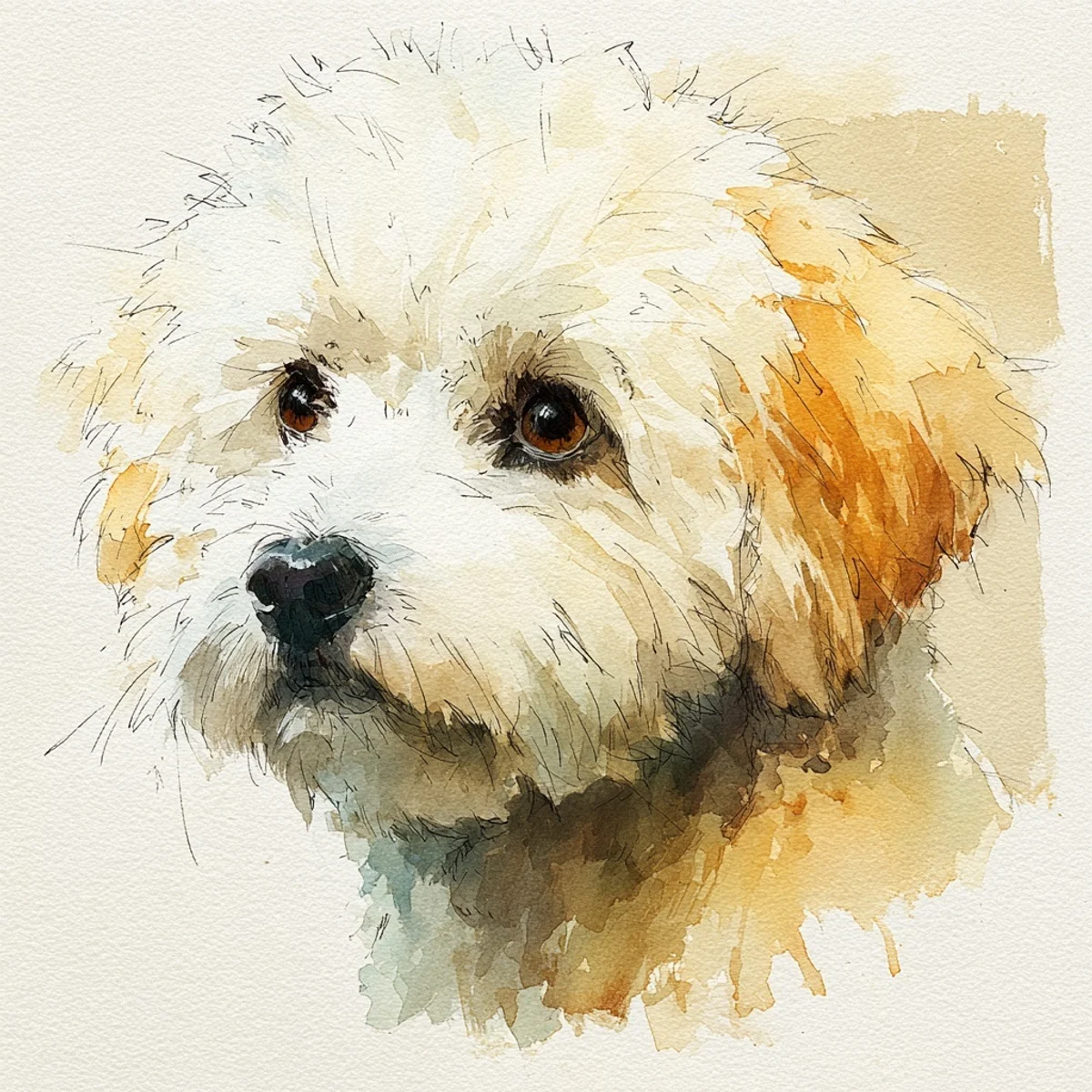
A search for "what do dogs dream about" returns roughly 200,000 results in 2026, and approximately none of them cite a single neuroscience paper properly. The category is dominated by blogs that lift quotes from a Stanley Coren essay (often misattributed), add some filler about "your dog is dreaming about you," and link to a custom-portrait product.
We are guilty of the last part too - this is a pet portrait atelier and we are about to recommend our memorial and watercolour styles at the bottom. The difference is that we want the science to be right first. Below is what neuroscientists actually know about dog dreams in 2026, with citations.
The scientific consensus, in one paragraph
Dogs experience REM (rapid eye movement) sleep similar to humans. Brain activity during REM is consistent with dreaming. They likely dream about activities they engaged in while awake - based on inference from rodent and human studies, plus direct observation of breed-specific behaviour during REM (pointers point in their sleep, retrievers mouth, terriers chase). Small dogs have more frequent but shorter dream cycles than large dogs. Puppies and senior dogs both dream more than adults.
That is approximately everything we can say with confidence. Everything else in the popular literature is extrapolation, anecdote, or invention.
What the actual research found
A short tour of the citable evidence.
Matt Wilson at MIT (2001) - rat hippocampal replay
The seminal finding came from rats, not dogs. Wilson and Louie at MIT recorded hippocampal cell firing in rats during maze-running tasks while awake, then recorded the same cells during subsequent REM sleep. The pattern of firing in REM replayed the maze-running pattern with high fidelity.
This was the first hard neuroscience evidence that mammals "replay" waking experiences during sleep. It does not directly prove rats are dreaming in the human sense, but it does prove that the brain is doing something structurally similar to dreaming - replaying recent experiences in sequence.
Reference: Louie, K., & Wilson, M. A. (2001). Temporally structured replay of awake hippocampal ensemble activity during rapid eye movement sleep. Neuron, 29(1), 145-156.
Stanley Coren - the popular science extension
Stanley Coren is the psychologist most commonly cited in dog-dream popular writing. His contribution was not new research but the synthesis. He extended Wilson's rat findings to dogs by reasoning from neuroanatomical similarity: dogs have the same brainstem structures (pons, hypothalamus, basal ganglia) that govern REM in rats and humans, so it is reasonable to infer the same replay process occurs.
Coren also wrote about breed-specific dream behaviour - pointers point, retrievers mouth, terriers chase. This is observational, not experimental, but consistent with the hippocampal-replay model.
Reference: Coren, S. (2010). Do Dogs Dream? Nearly Everything Your Dog Wants You to Know. W. W. Norton & Company.
Worth flagging: Coren is a careful writer and his book is well-reasoned, but the popular blogs that cite him often overstate certainty. He says "likely" and "consistent with" where the blogs say "definitely" and "scientifically proven."
Deidre Barrett - dream content inference
Deidre Barrett, a Harvard dream researcher, has written about the likely content of dog dreams. Her position: dogs dream about typical dog activities (running, chasing, eating, social interactions with their humans), based on extrapolation from human dream research showing that humans dream about waking activities.
This is the strongest claim that has popular traction ("your dog dreams about you"). The truth is more modest: dogs likely dream about whatever they do most during the day. If you are part of that day, you are likely in some of those dreams. The "they dream about you" framing is sweet but slightly more anthropomorphic than the underlying science.
Reference: Barrett, D. (2001). The Committee of Sleep. Crown Publishers. Plus various Psychology Today columns.
Dog sleep cycle research - the size correlation
The frequency and duration of REM cycles in dogs varies with body size. Small dogs (under 9 kg) cycle through REM more frequently - roughly every 10 minutes during sleep, with REM episodes lasting 15-60 seconds. Large dogs (over 30 kg) cycle less frequently - roughly every 60-90 minutes - with longer REM episodes of 4-5 minutes.
This means that observationally, you will see small dogs "dreaming" (twitching, leg-paddling, soft barking) more often, but each episode is shorter. Large dogs dream less frequently but more dramatically.
Reference: Adams, D. B., & Johnson, J. W. (1994). Sleep-wake cycles and other night-time behaviors of the domestic dog. Applied Animal Behaviour Science, 41(1-2), 1-9. Plus various follow-up studies in veterinary sleep research.
How to tell if your dog is dreaming
A practical checklist drawn from the observable signs of REM sleep in dogs:
1. Eye movement under closed lids
The clearest sign. If you can see the dog's eyes moving rapidly back and forth under closed eyelids, they are almost certainly in REM. This is the "rapid eye movement" the cycle is named for.
2. Leg twitches and paddling motions
Especially the back legs. The motor cortex fires during REM the same way it would during waking running, but the brainstem suppresses the actual motor output. Some signal leaks through, producing the characteristic paddling.
3. Soft barking, whining, or growling
The vocal cords usually receive the same kind of suppression that the legs do, so the sounds are softer and less articulated than waking vocalisations. Hearing your dog "talk" in their sleep is one of the most reliable signs of active dreaming.
4. Whiskers and lip movement
Often the first sign before any leg movement. The face activates first in many dreams, then the limbs.
5. Tail movement
Less common but distinctive. A sleeping tail that thumps the floor or curls and uncurls is consistent with REM.
If your dog shows three or more of these simultaneously, they are dreaming. The episode usually lasts 30 seconds to four minutes depending on size.
Should you wake a dreaming dog?
The popular advice is "let sleeping dogs lie" and there is some neuroscience behind it. Waking a dog mid-REM can produce momentary disorientation, occasionally aggression - the dog needs a few seconds to realise where they are and that you are not part of the dream.
The practical rule: only wake a dreaming dog if they appear genuinely distressed (loud distressed whimpering, thrashing rather than paddling, vocalisation that sounds fearful rather than excited). Even then, call their name softly from a distance rather than touching them.
How dream patterns change with age
A short summary:
- Puppies (under 6 months): dream constantly. Up to 30% of total sleep is in REM, compared to roughly 10-12% in adult dogs. The hypothesis is that the high REM proportion supports rapid learning consolidation.
- Adult dogs (6 months to 8 years): stable at roughly 10-12% REM during sleep. Cycle frequency depends on body size.
- Senior dogs (8+ years): REM proportion increases again, similar to humans in old age. The mechanism is not fully understood but appears related to memory consolidation slowing.
If your senior dog seems to be dreaming more than they did a few years ago, this is normal.
Breed-specific dream behaviour
Coren's observational work suggests breed-specific dreams. Some of the cleaner observations:
- Pointers and setters: point in their sleep. Front leg lifts, body goes rigid for 2-3 seconds, then relaxes.
- Retrievers (Labradors, Goldens): mouth movements as if carrying something. Sometimes accompanied by soft chewing motions.
- Terriers (especially working terriers like Jack Russells): rapid leg-paddling, often paired with soft prey-drive vocalisations.
- Herding breeds (Border Collies, Australian Shepherds): body shifts and orientation changes, as if mid-flock-movement.
- Hound breeds (Beagles, Bassets): soft baying vocalisations during REM. The bay is often the first sign rather than leg movement.
- Toy breeds: less observable breed-specific behaviour, likely because their original working role has faded over generations of companion breeding.
These are observations, not laboratory findings. The pattern is consistent enough across many anecdotal reports to be plausible, but no controlled study has tested it directly.
Frequently asked questions
Do cats dream?
Yes. The same REM cycle exists in cats, and cat dream content is even more strongly correlated with hunting behaviour than dog dreams are with running/chasing. The original REM-sleep research in mammals (Michel Jouvet, 1959) was conducted on cats specifically.
Do dogs have nightmares?
Occasionally. The signs are similar to dreaming but more distressed - higher vocalisation pitch, more rapid breathing, thrashing rather than paddling. Most pass within 30 seconds. If a dog has frequent apparent nightmares, it may be worth a vet check for anxiety or pain (some pain conditions produce restless sleep that resembles bad dreams).
Do dogs dream about their owners specifically?
Probably, in the same way humans dream about people they spend a lot of time with. The science does not confirm "your dog is specifically thinking about you while dreaming," but it does support "your dog's dream content likely includes you because you are a major part of their daily experience."
Why does my dog whimper in their sleep?
Most commonly, they are dreaming about something exciting (chasing, playing) and the vocal signal is the brainstem-suppressed version of an excited bark. Less commonly, they are dreaming about something distressing. If the whimpering sounds persistent and pained, consider a vet check.
Can I commission a portrait of my dog dreaming?
Yes - upload a photograph of them asleep and our Soft Watercolour style is the most flattering for the subject. The Minimal Line style also works beautifully for sleeping pets because the reduced palette suits the stillness.
Why this matters for portraiture
Dogs spend roughly 50% of their lives asleep. We see them awake; we photograph them awake; but a meaningful part of their inner life happens during the cycles described above. Portraits that catch them at rest (rather than mid-play, mid-bark, mid-bound) often feel like they capture the dog more accurately than action photographs do.
Our Soft Watercolour style and Memorial style are both built around stillness rather than action. If you have ever wondered whether the right photograph of your dog is the one of them asleep on the rug rather than the one of them running on the beach, the answer is often yes.
Begin with their photograph
Upload one photograph - awake or asleep - and see all six styles in 30 seconds. Free preview, refund within five minutes if it isn't them.
Most of the dog-dream content online is unsourced. The science is more modest than the popular versions but no less interesting. Dogs dream. They likely dream about the day they had. Small dogs dream more often; large dogs dream more dramatically. The pointer points; the retriever mouths; the terrier chases. The rest is inference.