Renaissance Pet Portraits - A Restrained Primer
What renaissance actually meant in European portraiture, why most "renaissance pet portraits" online are not renaissance at all, and how to commission a piece that earns the word.
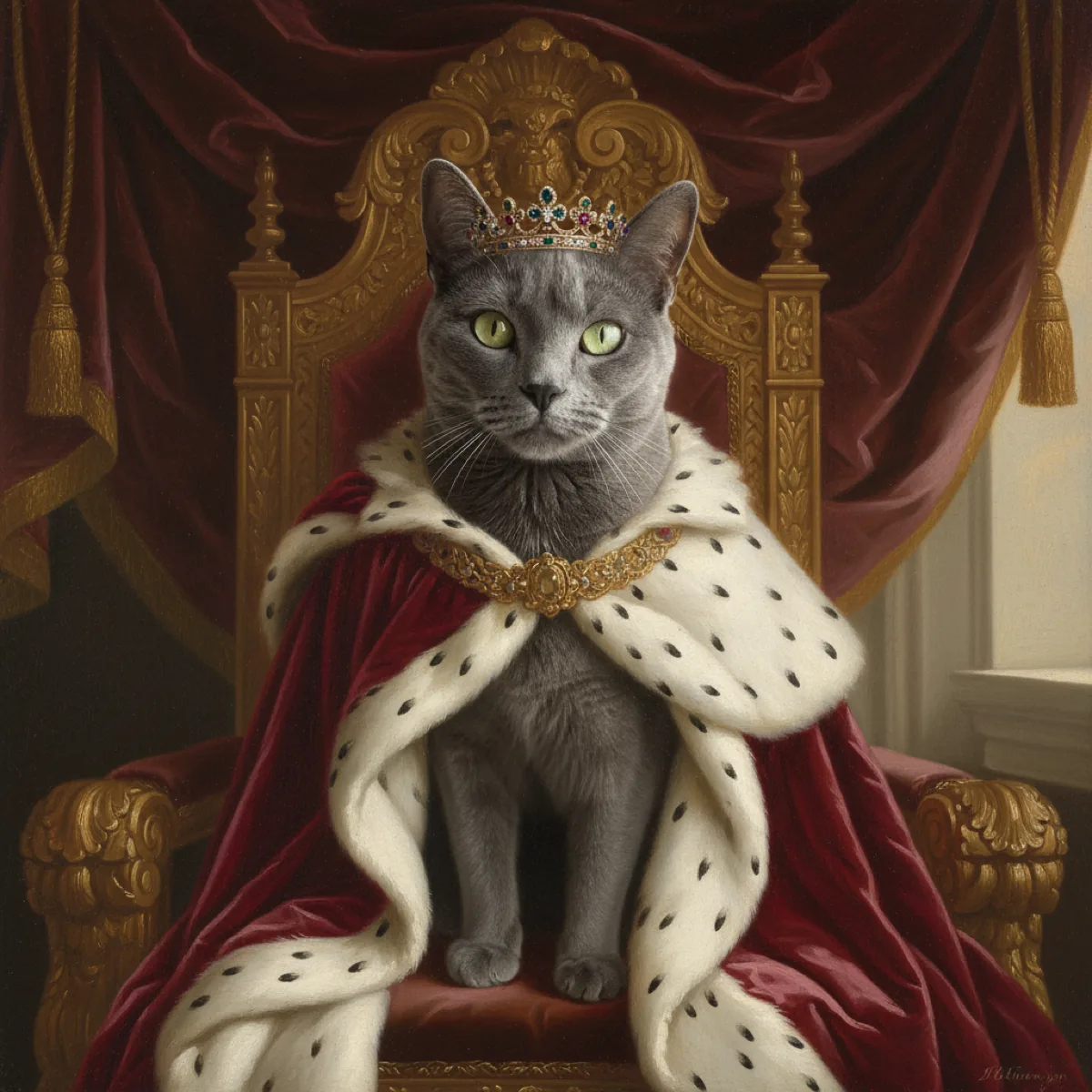
The word renaissance has been doing a lot of work in the pet portrait industry. Every velvet-cape AI generator markets itself as renaissance. Every dog-in-armour template on Etsy carries the same label. Search the term and you get pages of pieces that have approximately nothing to do with the actual Renaissance.
Renaissance in art history means a specific period (roughly 1400-1600 in Italy, slightly later in northern Europe) and a specific set of compositional principles developed by a specific group of painters. None of those painters painted a dog in a tiny crown. If we are going to commission a renaissance pet portrait, the least we can do is know what the word means.
This is the short primer.
What the actual Renaissance produced
A non-exhaustive list of what renaissance portraiture actually looked like, with examples you can find in any major museum:
- Hans Holbein the Younger painted Henry VIII and his court in three-quarter turn, against a dark green or red background, with absolute composure. The clothes were rich but the face did the work. Look up his portrait of Christina of Denmark (1538) - that is renaissance.
- Bronzino painted the Medici family in tight compositions with deeply controlled light. The Eleonora of Toledo with her son Giovanni (1545) is a study in the soft modulation that defines renaissance light handling.
- Titian painted with looser brushwork and warmer palettes. His portraits of the Hapsburg court are renaissance done in oil with painterly confidence.
- Lorenzo Lotto painted strange, restless, observant portraits that sit at the edge of the renaissance and what came after. Look up his Young Man with a Lamp (1506-08) and you will see why renaissance does not mean stiff.
- Albrecht Dürer brought renaissance principles north. His self-portrait of 1500 is so confident it is almost uncomfortable.
None of these painters used theatrical props. None used costume to substitute for character. The bearing of the sitter, the light on the face, and the controlled background are what make a renaissance portrait renaissance. Everything else is decoration.
What today's "renaissance pet portrait" usually means
A typical "renaissance pet portrait" sold by Crown and Paw, My Da Vinci, Furry Royal, Iconic Paw, and a hundred Etsy sellers is:
- A photograph of a dog dropped into a generic baroque template
- Velvet cape, jewelled crown, gold chain across the chest
- Sometimes a sword, sometimes a smoking pipe, occasionally a tiny telescope
- A painted-on background with a heavy ornate frame
- Output as a printed canvas, shipped, in 7-21 days
There is nothing wrong with this product. It is a costume joke and the joke works. But it is not renaissance in any art-historical sense. It is closer to a 1990s "have your photo taken in old-timey clothes" tourist booth than to anything Bronzino painted.
The disconnect matters because some buyers want the actual thing. They have just been to the National Gallery, they have seen the Holbein portraits, and they want their dog rendered in that tradition. The costume-shop version is not what they are looking for.
What an actual renaissance pet portrait should look like
If we strip out the costume and keep the compositional discipline:
- The pet, three-quarter turned, looking just past the viewer
- Soft side-lighting, single directional source, catchlight in both eyes
- A deep dark background, almost black at the edges, with a subtle warm gradient toward the sitter
- No props, no theatrical costume, possibly a subtle drape across the shoulders
- Painterly handling, with visible brushwork and the warm palette of late Italian renaissance painting
- A formal frame, dark wood with restrained gilt, not the heavy ornate baroque frame of the costume version
This is closer to what we render in our Oil Painting style than what we render in the Royal Portrait style. Oil Painting is the Olea and Hound piece that most directly draws on renaissance technique. See the Oil Painting style page.
Which pets suit a genuinely renaissance treatment
The renaissance compositional rules favour:
- Dogs and cats of obvious bearing. Mastiffs, Great Danes, working Shepherds, Salukis, Pharaoh Hounds, Siamese cats, Maine Coons, senior dogs of any breed.
- Pets at rest. Not panting, not playing, not actively excited. Composed, observant, alert.
- Pets with strong eyes. Renaissance portraits do everything with the eyes. A pet whose eyes do not engage with the viewer in the photograph will not engage with the viewer in the rendering.
Pets that do not suit a strict renaissance treatment include:
- High-energy working breeds (Border Collies, Springers, Belgian Malinois)
- Puppies and kittens under six months
- Pets with comic faces where the comedy is the point (Pugs, Bulldogs, Frenchies with their tongues out)
- Brachycephalic breeds photographed at an angle that emphasises the flatness of the face
For these, our Storybook or Oil Painting style works better. The renaissance handling fights the natural personality.
How to commission a renaissance-style portrait at Olea and Hound
Five practical steps:
- Choose the Oil Painting style. Our Oil Painting style is the closest of our six to the renaissance tradition. The Royal Portrait style is also viable if you want a slightly more formal posture with an optional drape.
- Photograph the pet in window light, three-quarter turned, half-body framed. The composition matters as much as the rendering. A photograph where the pet is head-on or in harsh light will not produce a renaissance-style result regardless of which atelier renders it.
- Order at the €69 three-style tier or €99 all-six. This lets you compare the Oil Painting against the Royal and the Watercolour rendering of the same pet. Most buyers find one style suits the pet's particular bearing better than they expected.
- Print at A2 on fine-art paper. Hahnemühle Photo Rag 308gsm is the gold standard. Local fine-art print shops have it. €25-€35 for the print.
- Frame in dark walnut or oak with a cream double mount. Not white, not natural pine, not silver. The frame style should match the period: heavy enough to anchor the piece, restrained enough to let the rendering do the work. €40-€80 from a competent framer.
Total cost for an A2 framed renaissance-style portrait on the wall: €100-€135. This is materially cheaper than the €140-€180 you would pay for a Crown and Paw-style shipped canvas, and the rendering tradition is closer to what renaissance actually means.
What we are not
We are honest about this. We are an AI atelier. We are not painting these by hand. A genuinely hand-painted renaissance pet portrait by a contemporary artist working in oil costs €1,500-€5,000 and takes 6-16 weeks. Artists who do this well include some specialists in the United States (Hannah Rothstein, Splendid Beast at the high end) and some European specialists who work on commission only.
If you want hand-painted renaissance and budget is not a constraint, those are the honest answers. If you want renaissance compositional discipline at a price that does not require a serious second thought, our Oil Painting style is the answer. The rendering technique is AI; the compositional tradition it draws on is 500 years old.
Frequently asked questions
What is the difference between renaissance and baroque in pet portraiture?
Renaissance (1400-1600) is restrained, controlled, formal. Baroque (1600-1750) is theatrical, dramatic, ornate. Most "renaissance pet portraits" sold online are actually closer to baroque (the velvet capes, the dramatic light, the heavy ornate frames). If you want a baroque dog portrait, Crown and Paw is the honest answer. If you want renaissance, look for restraint.
Did renaissance painters actually paint dogs?
Yes. Velazquez painted dogs frequently (Las Meninas has a mastiff). Veronese painted hunting dogs in his banquet scenes. Pisanello sketched dogs in courtly settings. The renaissance dog was almost always in a larger composition rather than as the sole subject - the standalone pet portrait as a genre is a 19th-century invention.
Can I commission a renaissance-style cat portrait?
Yes, and cats arguably suit the renaissance tradition better than dogs because of their natural composure. Renaissance painters did not paint many cats (cats were not as common in court life), but the compositional principles transfer cleanly. Our cat portrait line renders all six styles for cats.
Is the renaissance Oil Painting style available for two pets in one portrait?
Yes. Upload one photograph with both pets in frame, or upload separate photos and we compose them together. No extra cost. The renaissance tradition did include multiple-sitter portraits - Bronzino's mother-and-son pieces are the canonical example.
What if I want a renaissance pet portrait of a pet who has passed?
Use our Memorial style rather than Oil Painting in this case. The Memorial style is renaissance-adjacent (restrained composition, soft light, deep background) but specifically tuned for portraits of pets who are no longer with you. See the Memorial style page.
How does renaissance differ from the Royal Portrait style?
The Royal Portrait style allows a soft drape across the shoulders (the modern equivalent of court dress) and tilts toward the formal court tradition. The Oil Painting style is bare-shouldered, painterly, and tilts toward the renaissance sitter tradition. Both draw on the same 500-year-old compositional rules but with slightly different reference points.
Begin with their photograph
Upload one photograph and see all six styles in 30 seconds. The Oil Painting style is the closest to genuine renaissance handling; the Royal Portrait is the closest to the European court tradition. Free preview, refund within five minutes if it isn't them.
Renaissance is a serious word. The portrait should deserve it.